Lights, Laptop, Action: What Zoom Auditions Accidentally Revealed About Hollywood's Worst-Kept Secrets
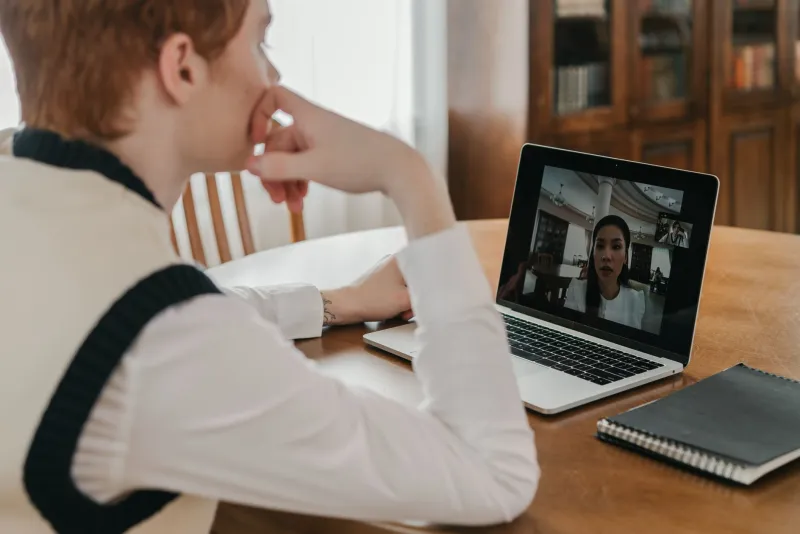
For decades, the casting room was a black box. What happened inside stayed inside — no witnesses, no recordings, no receipts. Then a global pandemic showed up and blew the whole system wide open, one Zoom link at a time.
When productions scrambled to keep moving in 2020, virtual auditions felt like a stopgap. A workaround. A temporary inconvenience until the world went back to normal. But something unexpected happened along the way: the shift to remote casting started generating a paper trail. And some of what that trail revealed wasn't pretty.
The Room Where It Happens — Except Now It's Your Bedroom
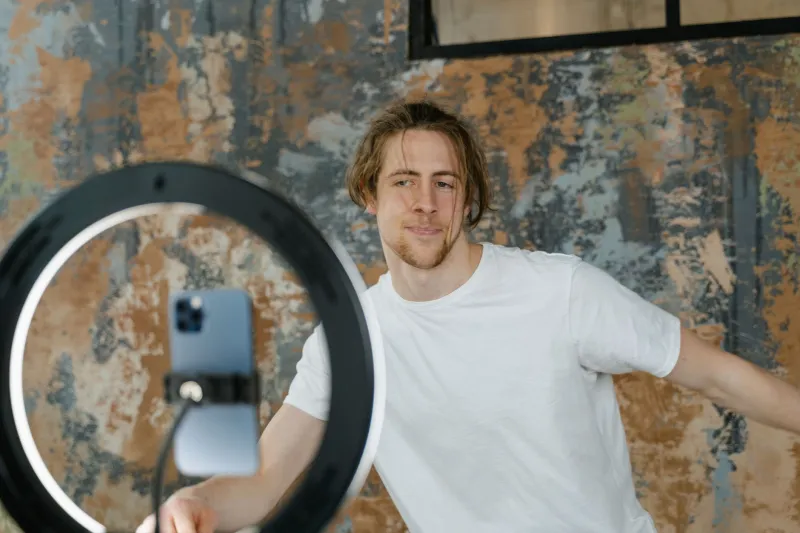
Here's the thing about a traditional casting room: it's neutral territory. Both parties show up on someone else's turf. Virtual auditions flipped that dynamic completely. Suddenly, actors were inviting casting directors — and sometimes powerful producers — into their homes. Their bedrooms. Their bathrooms, when the lighting was better.
That shift in setting created a new kind of vulnerability that a lot of people in the industry didn't talk about openly at first. "There's something deeply uncomfortable about being asked to perform in your own personal space for someone who holds your career in their hands," one actress who's been auditioning in New York for over a decade told us, asking to remain anonymous. "It felt weirdly intimate in a way that the formal casting environment never did."
On the flip side, some casting directors found themselves in uncomfortable positions too — fielding complaints about actors being asked to move to different rooms, change outfits on camera, or perform scenes under circumstances that would've raised eyebrows in a professional setting. The home environment, it turns out, erased a lot of the implicit professional guardrails that a formal studio space provided.
The Digital Footprint Nobody Planned For
Here's where things get genuinely interesting — and a little bit legally complicated. Zoom, Google Meet, and similar platforms don't just host conversations. They log them. Session metadata, chat records, and in many cases, recordings that participants may not have fully consented to, all started piling up on corporate servers.
For the first time in Hollywood history, there was documentation. Not perfect documentation, and not always admissible documentation, but something — which is more than actors ever had before when a casting director said something inappropriate in a private room.
Several talent agencies quietly updated their protocols after realizing their clients were sitting on digital evidence of interactions that previously would have evaporated the moment someone walked out of a room. "We started telling our clients to save everything," one mid-level agent at a boutique LA firm explained. "Session invites, chat logs, any written follow-up. Because now there's actually something to save."
Advocacy groups focused on performer safety took notice. The shift didn't eliminate predatory behavior, they were quick to point out — but it changed the math on accountability in ways the industry is still catching up to.
Safer? Or Just Differently Dangerous?
Ask around and you'll get two very different answers to that question, often from people in the same room.
Actors who experienced harassment or inappropriate behavior in traditional audition settings frequently describe virtual auditions as a relief. The physical remove matters. The fact that a casting director can't "accidentally" brush against you or linger too long after the session ends is not a small thing. For many performers, especially younger ones new to the industry, that distance felt like breathing room they hadn't known they needed.
But other industry insiders push back on the idea that digital equals safer. "The behavior just migrated," said one casting associate who worked on several major network projects during the pandemic years. "You had people making inappropriate comments in the chat. You had sessions being recorded without consent and shared. The power imbalance doesn't disappear because there's a screen between you."
There's also the issue of access. Virtual auditions were supposed to democratize the process — no need to fly to LA, no need to afford the gas money to drive across town. And in some ways, they did. Actors from smaller markets suddenly had a shot at projects they'd never have been seen for before. But the digital divide cut the other way too. Actors without reliable internet, professional-quality lighting, or a quiet space to record were quietly filtered out before anyone even watched their tape.
The Platforms Caught in the Middle
None of the major video conferencing platforms built their products with Hollywood casting in mind, and it shows. Zoom's privacy policies were never designed to navigate the specific consent complexities of a performer auditioning for a role. Google Meet doesn't have a mechanism for flagging inappropriate session behavior in real time. The tech companies found themselves functioning as accidental moderators of an industry they didn't fully understand.
Some purpose-built platforms have tried to fill the gap. Services like Casting Networks and self-tape submission tools have added features specifically aimed at protecting actors — watermarked submissions, limited viewing windows, audit logs showing who accessed a tape and when. It's not a complete solution, but it's a start.
The Screen Actors Guild-American Federation of Television and Radio Artists (SAG-AFTRA) has also been paying attention. The union has pushed for clearer guidelines around virtual audition conduct, and some of those conversations have made their way into contract negotiations. Whether the language ends up with teeth is another question entirely.
What Doesn't Change When the Camera Moves Online
Let's be honest about something: technology doesn't fix culture. The same power structures that made the traditional casting room dangerous didn't evaporate when auditions went virtual. The person on the other side of the screen still controls whether you get the callback. That fundamental imbalance — the one that made the industry vulnerable to abuse for generations — is still very much intact.
What's different is visibility. The digital shift made certain behaviors harder to hide and easier to document. It created, almost by accident, a set of conditions where accountability became at least theoretically possible in ways it hadn't been before.
Whether Hollywood actually uses that opening to do better is the part we're all still waiting to find out. The receipts exist now. The question is whether anyone with enough power is willing to read them.
For the actors still logging on, framing their shots, and performing their hearts out from their apartments, that answer can't come fast enough.