Same Old Hollywood, Brand New Platform: How Predatory Audition Culture Survived the #MeToo Era

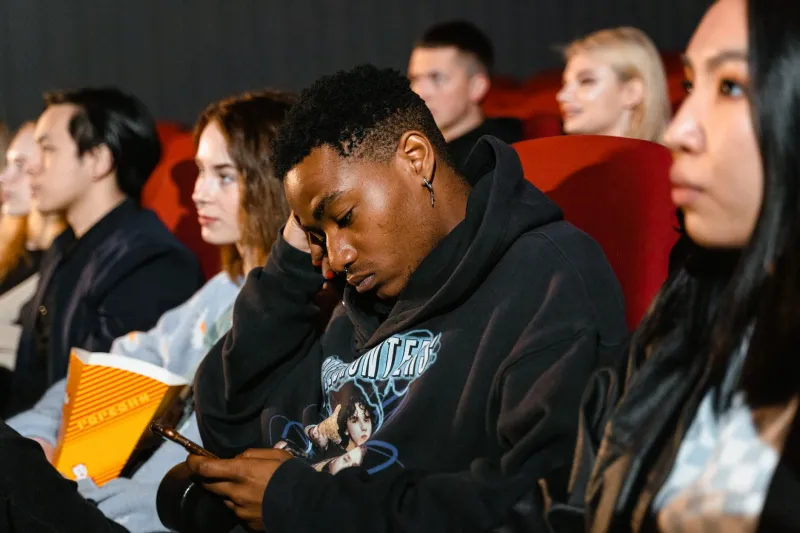
Photo by Photo by Vitaly Gariev on Unsplash on Unsplash
When the #MeToo movement exploded across Hollywood back in 2017, a lot of people genuinely believed the industry had hit a turning point. Predators were named. Careers collapsed. Studios scrambled to install HR departments and mandatory sensitivity training. For a hot minute, it felt like the rules of the game had finally changed.
But spend any real time talking to working actors — especially younger ones still clawing their way up — and a more complicated picture starts to emerge. The casting couch didn't disappear. It just got a Wi-Fi connection.
From Hotel Lobbies to Google Meet
The shift to virtual auditions during the pandemic was supposed to be a safety win. No more sketchy late-night callbacks in private offices. No more "just come by the house to run lines." And in some genuine ways, remote casting did reduce certain kinds of in-person risk.
But here's what nobody really talks about: the screen didn't neutralize the power imbalance — it just relocated it. Actors, particularly women and LGBTQ+ performers, describe virtual sessions where casting directors or producers make comments about their appearance that have nothing to do with the role, request they dress a certain way for the camera, or schedule calls at odd hours that feel deliberately isolating. The geography changed. The dynamic? Not so much.
One New York-based actress — who asked to remain anonymous because she's still actively auditioning — described a Zoom callback last year where a producer spent the first ten minutes of a thirty-minute session commenting on her hair and "energy" before ever asking her to read. "It felt exactly like the stories I'd heard about in-person auditions," she said. "Except now I was alone in my apartment and he was in his home office, and there was no one else in the room to witness anything."
What Actually Changed Post-#MeToo
To be fair, the industry did make some real structural moves. The major studios and networks rolled out formal codes of conduct. The casting director's union, the Casting Society of America, updated its ethics guidelines. SAG-AFTRA beefed up its member resources for reporting harassment. Background casting — historically one of the most vulnerable corners of the industry — saw some increased scrutiny.
These aren't nothing. Casting directors who operate above-board, and most do, point to a genuine cultural shift in professional norms around self-taping, in-person meetings, and what's considered appropriate feedback. "The conversation has absolutely changed," says one veteran casting director who works primarily in television. "Most of us were always doing this the right way. But there's no question that people who weren't are more careful now."
More careful. That's the phrase that keeps coming up. Not gone. Not eliminated. More careful.
The Gaps That Still Exist
Here's where things get complicated. The protections that exist tend to work best for actors who are already somewhat established — people with agents, managers, or union membership who have advocates in their corner and know their rights. For the massive pool of emerging talent, especially those working non-union gigs, the safety net has more holes than the industry likes to admit.
Small independent productions, student films, low-budget web series — these are the spaces where a lot of actors get their early experience, and they're also the spaces with the least oversight. There's no HR department on a three-person indie shoot. There's no union rep watching over a self-tape request that asks an actor to wear something specific and send it directly to a producer's personal email.
Digital platforms have also created entirely new categories of gray area. The explosion of content on streaming services means there are more productions, more casting calls, and more people claiming to be producers or casting associates than ever before. Verifying who you're actually talking to in a virtual audition — and whether that person has any legitimate authority — is harder than it sounds.
The Self-Tape Problem
Self-tapes deserve their own conversation. What started as a convenience tool has become the dominant audition format across most of the industry, and while it has genuine benefits, it's also created some murky new territory.
Actors report receiving self-tape requests with oddly specific wardrobe or physical instructions that feel less like character direction and more like something else entirely. Because self-tapes are submitted directly — often without an agent acting as a buffer — the boundary between professional request and inappropriate demand can blur fast. And because rejection is the default state of auditioning, many actors absorb these requests without questioning them, afraid that pushing back means losing the opportunity.
"You get so used to just doing whatever it takes," says one actor who's been working in Los Angeles for about four years. "And then one day you look back at some of the things you agreed to and you think, why did I think that was normal?"
What Actors Can Actually Do
Industry advocates and union reps offer a few consistent pieces of advice for navigating this landscape. First: know your rights. SAG-AFTRA has resources specifically designed to help members understand what casting directors and producers can and cannot ask of them. Even non-union actors benefit from reading up on these standards as a baseline.
Second: use the buffer whenever possible. Having an agent or manager as the primary point of contact for auditions — rather than communicating directly with producers — creates a layer of professional distance that matters. It also means there's a paper trail and another person who knows what's being asked of you.
Third: trust the feeling. A lot of actors describe knowing something felt off but convincing themselves they were overreacting. They weren't. If a virtual audition, a self-tape request, or a callback feels wrong, that instinct is worth taking seriously.
The Bigger Picture
None of this is to say Hollywood is the same place it was in 2016. It genuinely isn't. But the entertainment industry has always been exceptional at performing change while preserving the structures that benefit the people already at the top. The casting process — where aspiring talent is most vulnerable and least powerful — remains one of the clearest examples of that dynamic.
#MeToo cracked something open. The question is whether the industry has the will to finish the job, or whether it's content to update the aesthetics of a problem while leaving the problem itself largely intact.
For the actors still showing up to those Zoom links, hoping this is the one that changes everything, the answer to that question is anything but abstract.