The Invisible Hand: How Hollywood's Elite Are Quietly Rigging the Game for Their Own Kids

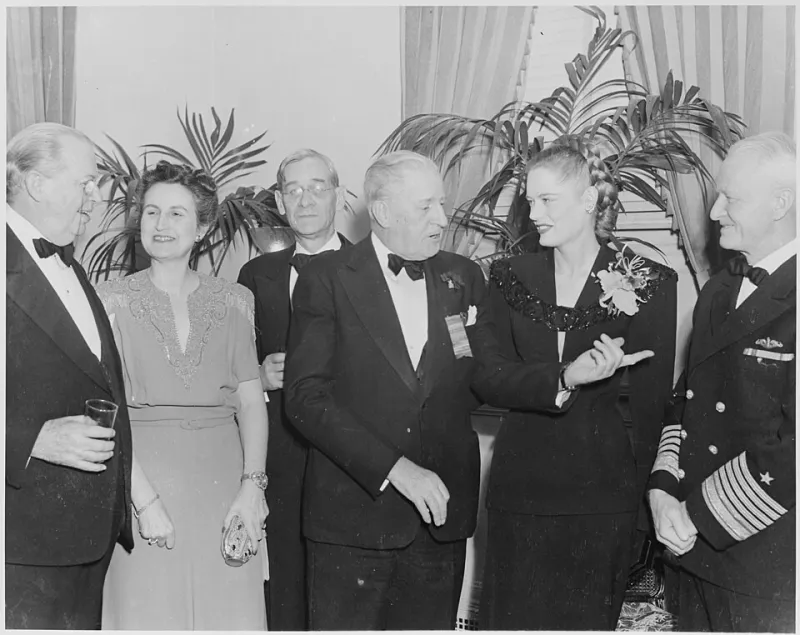
Photo: Bain News Service; Uploaded by Calliopejen; Edited by jjron., Public domain, via Wikimedia Commons
Everybody loves a good origin story. The small-town kid who moves to Los Angeles with $200 and a dream, lands a callback on a Tuesday, and books a Netflix series by Friday. It's a great narrative. It's also, increasingly, a fantasy.
Behind the glossy Instagram announcements and 'we're so proud of our daughter' red carpet moments, there's a much less romantic system quietly humming along. Hollywood's most powerful parents aren't just cheering from the sidelines — they're building the entire stadium.
It's Not What You Know. It's What Your Parents Own.
Let's be honest: nepotism in entertainment is nothing new. Hollywood has always had its dynasties — the Fondas, the Douglases, the Hustons. But what's changed in the last decade is the scale and sophistication of the operation. It's no longer just a phone call from a famous dad to an old casting director friend. Today's celebrity parents are leveraging production deals, first-look agreements, and agency relationships in ways that quietly shut the door on outside competition before auditions even begin.
Industry insiders — most of whom spoke to us on condition of anonymity because, well, they still want to work — describe a system where certain projects are essentially pre-cast before a single breakdown hits the casting boards. "There are projects where you know going in that a specific name is attached," one veteran casting director told us. "It's not always written anywhere. It's just understood."
That 'understanding' can mean the difference between a genuinely competitive audition process and a formality designed to tick a box.
The Production Deal Pipeline
Here's where it gets structural. Many A-list celebrities have their own production companies with active deals at major studios. That's completely legitimate — and often produces great content. But when those same production companies are developing projects that conveniently star the celebrity's kid in a lead role, the conflict of interest becomes hard to ignore.
Think about it from a studio executive's perspective. You've got a producing partner whose name alone generates press coverage and whose relationships span every major agency in town. When that partner says their child is 'perfect' for the lead in a new series, how much pushback is a junior development exec really going to offer?
"The power dynamic makes honest feedback almost impossible," said one former studio development executive. "Nobody wants to be the person who told [major celebrity's] kid they weren't right for the role."
The result? Roles that might have gone to a genuinely competitive process get quietly allocated before the public ever hears about them.
The Agent Problem
Representation is another chokepoint. The top talent agencies — the ones with the relationships that actually matter — aren't exactly running open enrollment. Getting signed to a major agency fresh out of acting school, with no credits and no connections, is extraordinarily difficult. Getting signed when your parent is one of the agency's top earners? Considerably less so.
This creates a compounding disadvantage for outsiders. Without top-tier representation, actors from non-industry backgrounds can't access the same audition opportunities, can't get in front of the same casting directors, and can't build the kind of momentum that leads to real career traction. The playing field isn't just uneven — it's operating in a completely different zip code.
"There are kids who have been grinding for years, taking every class, doing every student film, who can't get a meeting at a major agency," one talent manager told us. "Meanwhile, someone's kid gets signed before they've done a single thing professionally. That's just the reality."
Case Studies Worth Examining
Without naming names and starting feuds (this is PopularMedia, not a courtroom), it's worth noting some observable patterns. In recent years, several high-profile projects — from prestige drama series to major studio films — have debuted with lead actors who happen to share last names with their projects' producers or executive producers. Coincidence? Maybe once. As a recurring pattern? It starts to look like something else.
What's particularly notable is how these situations tend to generate less scrutiny than you'd expect. When a celebrity kid books a big role, the entertainment press often frames it as a heartwarming family story rather than asking harder questions about how the opportunity materialized in the first place.
What This Means for the Outsiders
For the genuinely talented people trying to break in from outside the industry bubble, this system is demoralizing in a very specific way. It's not a rejection you can fight or a skill gap you can close. It's an invisible wall that doesn't appear on any official policy document and that nobody will officially acknowledge.
Drama school graduates, community theater veterans, and self-taught actors from non-entertainment backgrounds are competing — often without knowing it — against a system that has already made certain decisions. Their headshots go into the same pile, but the pile is sorted before it's ever reviewed.
Some are finding workarounds. Social media has genuinely democratized visibility, if not access. Creators who build audiences on TikTok or YouTube occasionally convert that platform traction into industry interest that bypasses the traditional gatekeeping structure. But that path is its own kind of lottery.
The Conversation Hollywood Keeps Avoiding
The entertainment industry loves talking about diversity, equity, and inclusion. And to its credit, there's been real, meaningful progress on several fronts. But the nepotism conversation remains oddly muted — perhaps because the people who would need to lead it are exactly the ones who benefit most from the current arrangement.
A few voices have been willing to speak up. Some working actors have made pointed comments in interviews about the challenges facing people without industry connections. But sustained, institutional-level conversation about how to create genuinely open competition? It hasn't happened yet.
Until it does, Hollywood's invisible hand will keep doing what it does best: quietly making sure the right families stay on top.